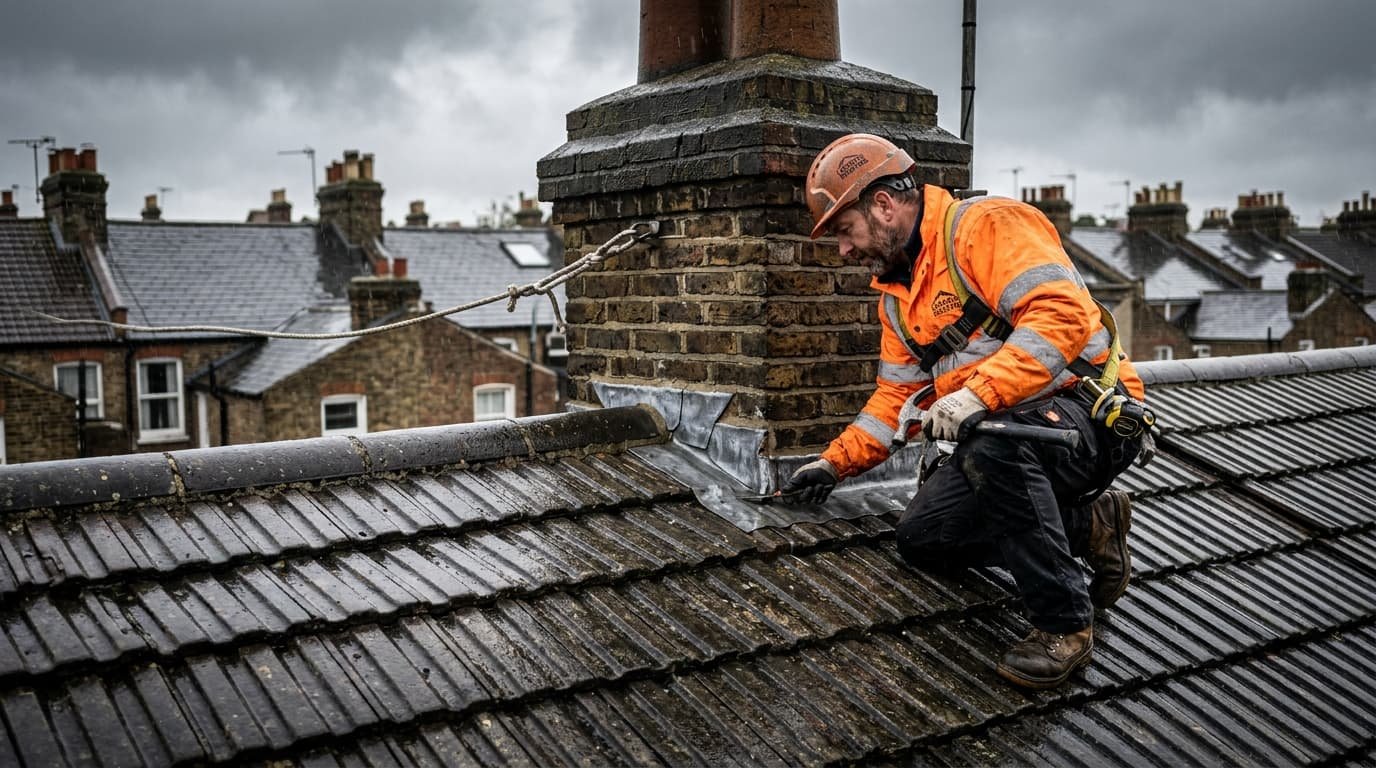
Living in London means loving the city’s energy, history, and unique neighbourhoods. But if you own a home here, you know one thing is always waiting around the corner: rainy weather. From the steady drizzle in Camden to the sudden downpours in Croydon, London’s climate is tough on roofs. Over my years working as a roofer across North, South, East, and West London, I’ve seen how quickly a small roofing issue can turn into a costly headache if ignored.
The good news? With the right advice and a bit of regular care, you can keep your home dry, cosy, and protected all year round. This guide brings you the best roofing tips for London homes facing heavy rain and damp weather. You’ll learn about common problems, smart prevention, practical fixes, and when it’s time to call a professional like Denco Liquid Waterproofing. Let’s get straight to what matters most for your roof in London’s rainy climate.
Why Rainy London Weather Demands Special Roofing Care
London gets an average of 110 rainy days per year. While it might not be the wettest city in the UK, the constant moisture, drizzle, and occasional heavy storms mean roofs don’t get much time to dry out. Over time, this leads to unique problems:
- Persistent leaks (even small ones can worsen quickly)
- Moss and algae growth (especially on north-facing roofs)
- Water pooling (common on flat roofs)
- Damp, mould, and rot (damage to timber and insulation)
In London, a roof isn’t just a cover—it’s your first line of defence against damp and water damage. Older Victorian and Edwardian homes, modern terraces, and post-war flats all have different roofing styles, but they share one enemy: persistent rain.
Common Roofing Problems In Rainy London
Let’s take a look at the issues I see most often on London homes during wet weather.
1. Leaks And Drips
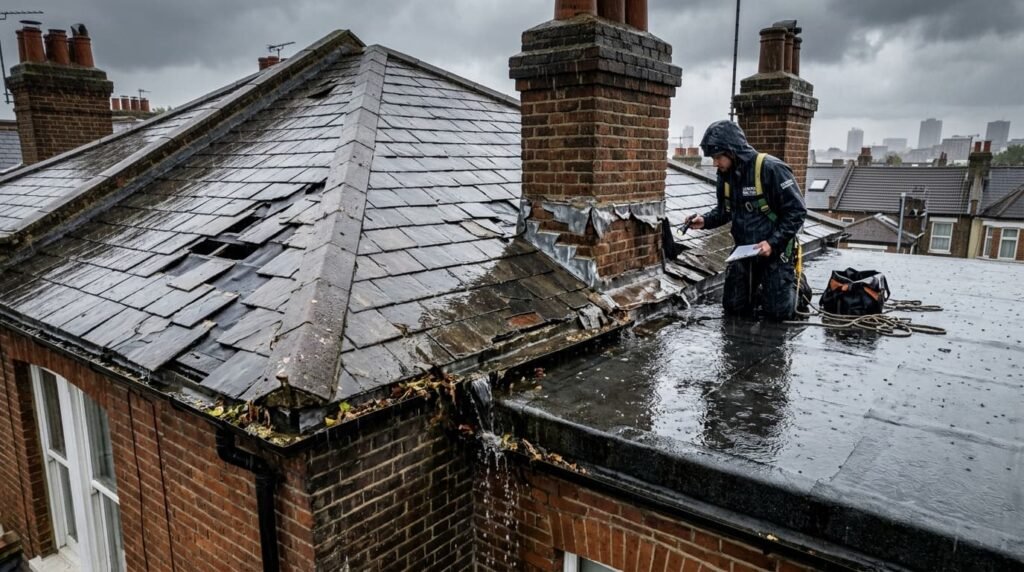
A leak might start as a tiny stain on the ceiling, but it can quickly lead to damaged plaster, ruined paint, and even electrical risks. London’s older homes often have slipped slates or cracked tiles that let water in. Modern flat roofs can develop invisible cracks that only show up during a heavy downpour.
2. Flat Roof Troubles
Flat roofs are popular in London, especially on extensions, garages, and some terraced homes. They’re practical, but heavy rain can cause:
- Water pooling (standing water that doesn’t drain)
- Blistering and splits in felt or membrane
- Sagging (when structure weakens from damp)
A flat roof with poor drainage is a ticking time bomb for leaks.
3. Moss, Algae, And Plant Growth
London’s damp climate is perfect for moss and algae. Moss holds water against roofing materials, speeding up wear and creating weak spots where water can enter. It’s especially bad on north-facing or shaded roofs.
4. Damaged Flashing And Leadwork
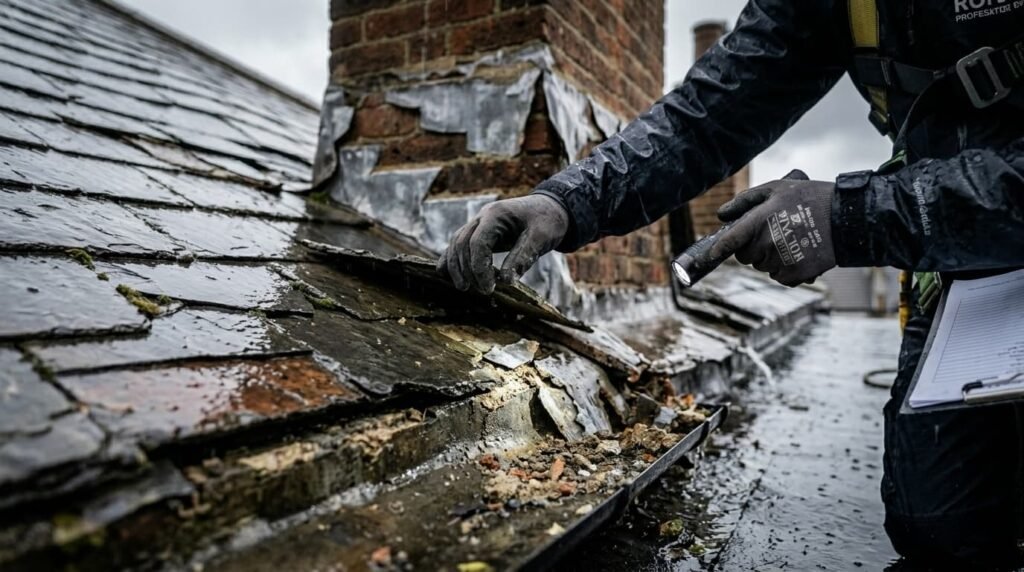
Flashing (the metal strips around chimneys, dormers, and valleys) keeps water out of the most vulnerable joints. In rainy London, flashing can corrode, lift, or crack, especially on older properties with historic leadwork.
5. Blocked Gutters And Downpipes
Leaves, moss, and debris from trees fill up London’s gutters fast, especially in autumn. Blocked gutters overflow, sending water down your walls and causing damp inside.
6. Rotting Timbers And Damp Insulation
When water finds its way through the roof, it doesn’t just stop at the ceiling. It can soak into wooden beams, rafters, and insulation. Over time, this leads to structural problems and even health issues from mould.
Non-obvious insight: In London, wind-driven rain (from storms coming off the Thames or across the city) can force water under roof tiles, not just through obvious holes.
Early Warning Signs: What London Homeowners Should Not Ignore
Catching problems early is the smartest thing you can do. Here are the signals your roof might need attention:
- Water stains on ceilings or walls
- Peeling paint or bubbling wallpaper upstairs
- Mouldy smells in lofts or bedrooms
- Moss growth you can see from the ground
- Dripping sounds in heavy rain
- Sagging gutters or visible blockages
- Tiles or slates on the ground after storms
If you see any of these, don’t ignore them. London’s rain doesn’t give your roof a break, so even a small problem can become urgent fast.
How To Protect Your Roof From Rain And Damp
Prevention is always better (and cheaper) than repair. Here’s how to keep your London roof strong through every rainy season.
1. Book Regular Roof Inspections
Get a professional inspection at least once a year, and after big storms. A roofer knows where to look for hidden damage, especially in tricky spots like valleys, around chimneys, and flat roof edges. Homeowners often miss early signs that a trained eye will spot.
2. Clean Gutters And Downpipes
Gutters should be cleared twice a year—spring and autumn are best. This stops blockages that lead to overflowing water and damp walls. Use a ladder safely or hire a professional for tall or hard-to-reach roofs.
3. Remove Moss And Debris
Don’t let moss and leaves build up. Moss remover products are available, but be careful: scraping or pressure washing can damage tiles. If you’re unsure, ask a roofer who knows London’s common roof types.
4. Check And Maintain Flashing
Look at the metal strips around chimneys and roof joints. If they’re loose, cracked, or missing, water will get in. Properly installed leadwork can last decades, but once it’s damaged, it needs fast attention.
5. Inspect Tiles And Slates
After storms, do a visual check from the ground. Missing, cracked, or slipped tiles need prompt fixing. Even one broken tile can let enough water in to cause thousands in damage.
6. Watch Flat Roofs Closely
Flat roofs should never have standing water for more than 48 hours after rain. If you notice ponding, splits, or soft spots underfoot, call a specialist. Regular felt roofs last 10-15 years; newer membranes (like EPDM or GRP) last longer but still need checks.
7. Trim Overhanging Trees
Trees drop leaves, twigs, and moss, all of which block gutters and trap moisture on the roof. Keep branches trimmed back so nothing hangs over your roof.
8. Keep Loft Spaces Ventilated
Good airflow in your loft stops condensation and mould. If you notice water droplets or mould on insulation, it’s a sign your roof or ventilation needs help.
Non-obvious insight: In London’s older homes, uninsulated chimneys and poor loft ventilation often cause “cold spots” that attract damp and mould, even if your roof is sound.
Practical Fixes For Minor Roofing Problems
Some small jobs you can tackle yourself if you’re confident and have the right tools. But always put safety first—roofs can be dangerous, especially when wet.
Clearing Blocked Gutters
- Wear gloves, use a sturdy ladder, and never over-reach.
- Scoop debris into a bucket, then flush with water.
- Make sure downpipes are clear—poke a garden hose down to check.
Removing Moss
- Use a specialist moss scraper or brush (never metal tools).
- Apply a moss treatment solution safe for your roof type.
- Rinse gently, avoiding high-pressure jets.
Replacing A Broken Tile
If you can access the tile safely:
- Slide out the broken tile.
- Slot a new one in place, making sure it sits flush.
- For flat roofs, use roofing tape or liquid rubber for small cracks.
If you’re unsure, call a professional. It’s easy to cause more damage or risk injury.
Sealing Minor Flat Roof Splits
- Clean the area.
- Apply a patch with roofing tape or liquid sealant.
- This is only a temporary fix—have it checked by a pro soon.
When To Call A Roofing Professional
Some jobs are too complex, risky, or urgent for DIY. If you see any of these, call a trusted roofing company like Denco Liquid Waterproofing:
- Water dripping inside during rain
- Large areas of missing/slipped tiles
- Flat roof ponding or soft spots
- Mouldy smells in your loft
- Lead flashing coming loose
- Sagging rooflines
Professional roofers have the right gear, materials, and experience to fix problems quickly and safely—before they become disasters.
Choosing The Right Roofing Materials For London’s Rain
Not all roofing materials are equal in wet climates like London’s. Here’s how the main types compare for water resistance and durability.
| Material | Water Resistance | Typical Lifespan | Maintenance Needs |
| Clay Tiles | Excellent | 50+ years | Low |
| Natural Slate | Excellent | 80-100 years | Low |
| Concrete Tiles | Good | 40-60 years | Medium |
| Felt Flat Roof | Fair | 10-20 years | High |
| EPDM Rubber | Very Good | 20-30 years | Low |
| GRP/Fibreglass | Very Good | 20-30 years | Low |
Tip: For London’s heavy rain and moss-prone climate, natural slate and high-quality clay tiles are excellent choices for pitched roofs. For flat roofs, modern membranes like EPDM or GRP are more durable than old-style felt.
Comparing Roofing Problems Across London Areas
Different parts of London face unique roofing challenges due to local climate, building age, and trees. Here’s how issues can vary:
| Area | Common Problem | Why? | Best Prevention |
| North London (e.g. Hampstead) | Moss & blocked gutters | Many trees, older slate roofs | Regular cleaning, moss removal |
| South London (e.g. Croydon) | Flat roof leaks | Many 1930s homes, extensions | Upgrade flat roof membranes |
| East London (e.g. Stratford) | Lead flashing failure | Victorian terraces, old chimneys | Inspect flashing yearly |
| West London (e.g. Ealing) | Tile cracks & wind damage | Exposed to storms | Check tiles after bad weather |
Wherever you live, regular checks and fast repairs make all the difference.
Smart Upgrades For A Rain-proof London Roof
If you’re planning home improvements or a roof replacement, consider these upgrades to make your roof future-proof against London rain.
1. Upgrade To Modern Flat Roof Membranes
Traditional felt roofs are cheap but need frequent repairs. EPDM rubber and GRP fibreglass are more water-resistant and last much longer with less maintenance.
2. Add Roof Insulation And Ventilation
Modern insulation keeps homes warmer and drier by preventing condensation under the roof. Good ventilation (like ridge vents or soffit vents) stops damp air from getting trapped.
3. Install Gutter Guards
Mesh guards keep leaves and moss out of gutters, reducing blockages and overflow. They’re a smart investment for homes under trees.
4. Fit A Roof Rainwater System
Consider rainwater diverters or water butts to safely direct water away from foundations and collect it for your garden.
5. Choose Quality Leadwork
Don’t skimp on flashing or leadwork. Well-installed flashing around chimneys, valleys, and roof edges is your best defence against leaks.
Expert tip: Upgrading your roof may also improve your home’s energy rating and value, especially in London’s competitive housing market.
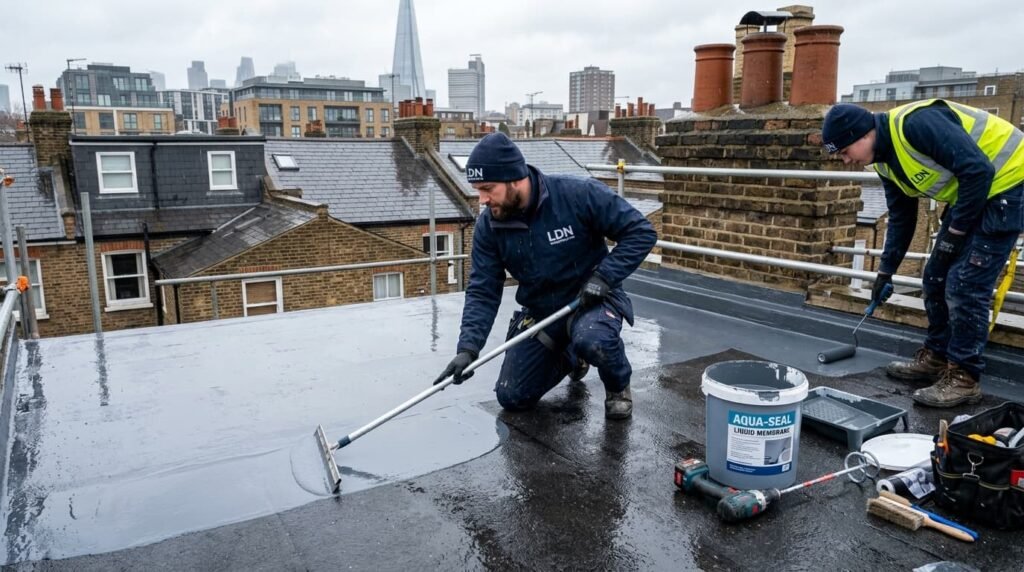
Why Choose Denco Liquid Waterproofing For London Roofing?
When rainy weather hits, you want fast, reliable help from experts who know London’s roofs inside and out. That’s why many homeowners turn to Denco Liquid Waterproofing. Here’s why they’re trusted across the city:
- Full coverage: They work in every London borough, from Barnet to Bromley
- Decades of experience: Real knowledge of the city’s unique roofing challenges
- Emergency repairs: Fast help when you need it most
- Modern solutions: From classic slate to advanced flat roof systems
- Friendly, honest advice: No pushy sales, just what’s right for your home
If you’re worried about your roof in rainy weather, don’t wait for the next big leak. Get in touch with professionals who can keep your home dry and safe.
Cost Of Roofing Repairs In London
Many homeowners worry about cost. Here’s a look at typical price ranges for common jobs in London (as of 2026):
| Repair Type | Typical Cost (inc. VAT) | Notes |
| Gutter cleaning | £80 – £180 | Depends on house size |
| Replace broken tile | £100 – £250 | Access can affect price |
| Flat roof patch repair | £200 – £500 | Small area (1-2m²) |
| Full flat roof replacement | £1,000 – £3,500 | Depends on material and size |
| New lead flashing | £400 – £900 | Chimney or valley |
Tip: Small repairs done early are always cheaper than waiting for big leaks. Most reputable companies, including Denco Liquid Waterproofing, offer free surveys and honest quotes.
How To Prepare For Heavy Rain: Last-minute Checklist
If the forecast shows a big storm coming, here’s what you can do right now:
- Clear leaves from gutters and drains.
- Check for loose tiles or slates from the ground.
- Move valuables away from at-risk ceilings.
- Close loft hatches to reduce draughts and moisture.
- Keep the number of a trusted roofer handy for emergencies.
Don’t risk climbing on your roof in wet weather—safety first.
What Most Homeowners Get Wrong About London Roofs
Many people assume that:
- “My roof is only a few years old, so it’s fine.”
Even new roofs can have poor installation or hidden faults.
- “Flat roofs are always a problem.”
Modern membranes can last decades with the right care.
- “A little moss is harmless.”
Moss traps water and shortens roof life.
- “All roofers are the same.”
London’s building codes and climate mean you need real local expertise.
Trust your gut—if something seems off, get it checked. You’ll save money, stress, and bigger repairs later.
When Should I Call Denco Liquid Waterproofing?
Call Denco Liquid Waterproofing if you see leaks, water stains, moss growth, or any sign your roof isn’t keeping water out. They’re trusted across London for fast repairs, honest advice, and long-lasting solutions for all roof types.
—
A dry, healthy roof is one of the best investments you can make in your London home. With regular checks, quick fixes, and trusted professionals like Denco Liquid Waterproofing on your side, you can face even the wettest London weather with confidence. Don’t wait for a leak—be proactive and keep your home safe, dry, and valuable for years to come.
All You Need To Know
What Is The Best Roofing Material For London’s Rainy Weather?
The best materials for London are natural slate and clay tiles for pitched roofs, and EPDM rubber or GRP fibreglass for flat roofs. They’re highly water-resistant and stand up to moss and frost better than cheaper felt or concrete tiles. Always match the material to your home’s style and local planning rules.
How Can I Tell If My Roof Is Leaking?
Common signs include water stains on ceilings or walls, a musty smell in your loft, bubbling paint, and visible drips during or after rain. If you notice any of these, call a professional roofer quickly—leaks get worse fast in London’s damp climate.
How Often Should I Get My Gutters Cleaned?
For most London homes, twice a year is best—once in late autumn after the leaves have fallen, and again in spring. If you have trees over your roof, or see moss building up, you may need to do it more often.
Are Flat Roofs A Bad Idea In London?
Not at all—modern flat roofs using EPDM or GRP are reliable and last many years with the right installation and maintenance. Problems usually come from old, poorly-installed felt or blocked drains. Regular checks keep flat roofs trouble-free.