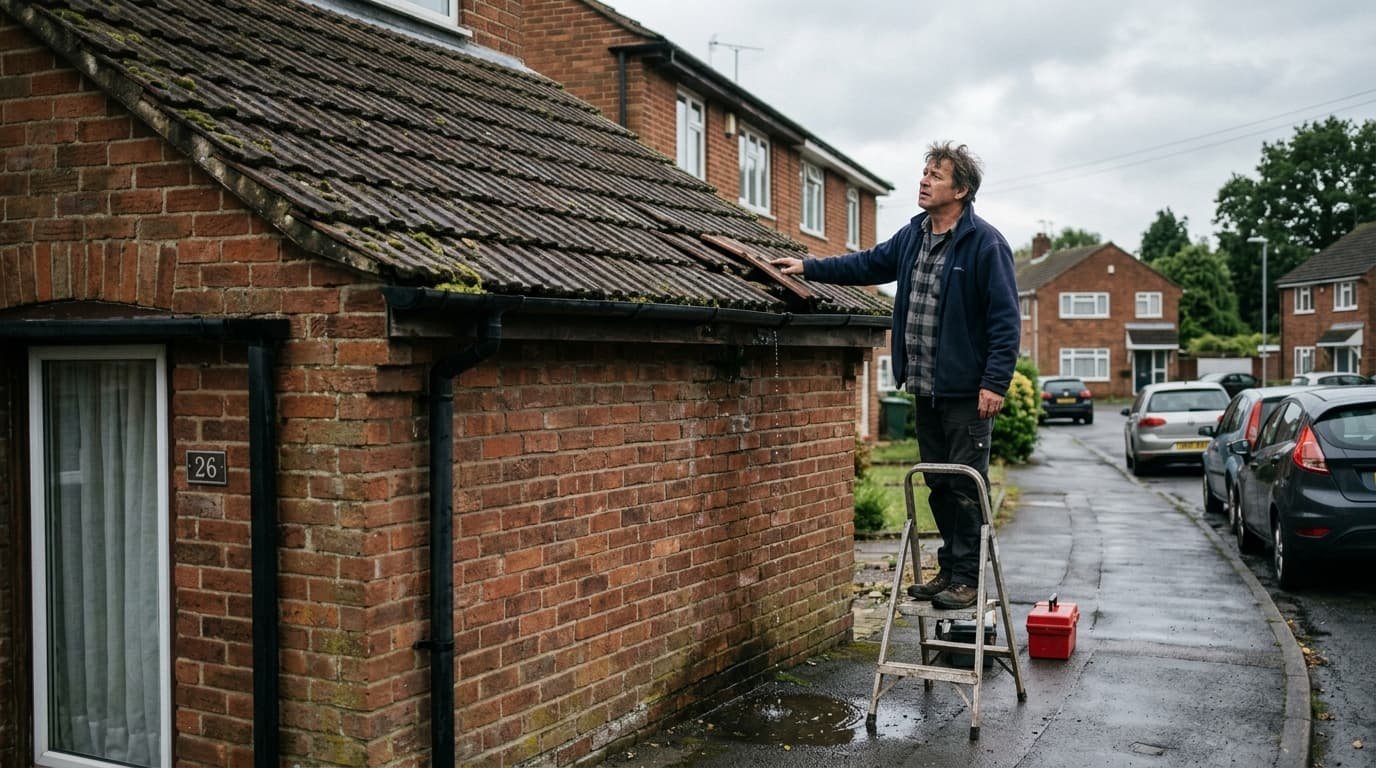
If you live in the UK, you know how important a strong, watertight roof is. Here in London, the weather changes quickly—one minute it’s a sunny spell, the next, it’s raining cats and dogs. I’ve worked as a roofing contractor at Denco Liquid Waterproofing for years. I’ve encountered all sorts of roof problems.
Many homeowners don’t notice the early signs of roof damage until it becomes a big, expensive issue. You don’t have to wait until water is pouring through your ceiling to act. Spotting trouble early can save you thousands and keep your home safe and dry.
Let’s walk through the top 7 signs your roof needs repair in the UK. I’ll explain what to look for, why it matters, and what action you should take. Whether you own a Victorian terrace in London or a modern semi in Manchester, these tips will help you catch problems before they get serious.
1. Missing, Broken, Or Slipped Tiles
The UK’s winds and rain are tough on roof tiles. A single broken or missing tile can let water into your roof. This can cause rot, mould, and quick damage. Look for slipped tiles from the ground. Check for uneven lines or patches where the tile pattern changes. Tiles can crack or break and still stay in place. This makes them hard to notice unless you look closely or see pieces in your gutters.
Tiles are your roof’s first line of defence. Even one missing tile can give water an entry point. In my experience, ignoring a slipped tile almost always leads to much bigger leaks. If you see a tile on your driveway after a storm or notice an odd patch on your roof, call a professional for an inspection.
Replacing a few tiles is much cheaper than repairing water-damaged rafters or ceilings.
Why Tiles Fail
- Weathering: Constant freeze-thaw cycles crack tiles.
- Storm Damage: Strong winds lift tiles, especially at the roof’s edge.
- Poor Fixing: Old roofs may have tiles fixed with sand and lime, which weakens over decades.
Example
A client in North London ignored two slipped tiles over his kitchen. Within a month, damp patches appeared on the ceiling, leading to mould and plaster damage. A simple tile fix would have cost under £200, but the internal repairs added up to over £1,000.
2. Water Stains Or Damp Patches On Ceilings
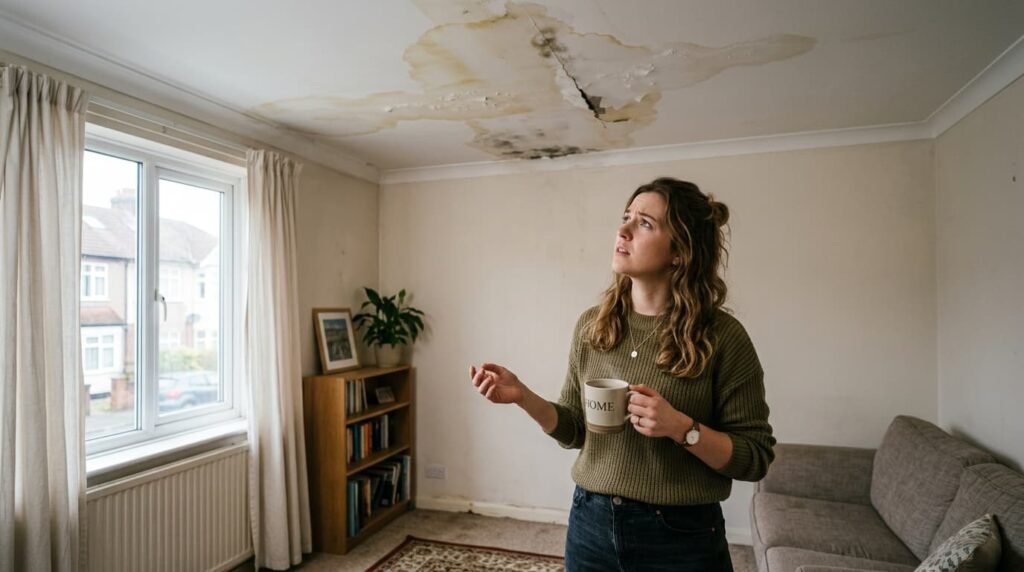
If you notice brown stains or damp spots on your ceiling, your roof is telling you something is wrong. These stains often appear after heavy rain and might grow larger over time. The water might not be dripping yet, but the stain means moisture is already getting through your roof covering and soaking into the plaster.
Damp patches can also signal condensation or plumbing leaks, but if the patch is near an outside wall or in the loft, the roof is usually to blame. Stains can show up far from where the water enters, as moisture can travel along beams before soaking through.
Hidden Dangers
- Mould Growth: Dampness encourages mould, which is unhealthy and hard to remove.
- Plaster Damage: Moisture weakens plaster, causing it to crack or fall off.
- Structural Rot: Long-term leaks can rot timber beams.
What To Do
Don’t just paint over stains. Find the source—often a cracked tile, damaged flashing, or failed felt. At Denco Liquid Waterproofing, we always inspect above the stain to trace the leak. Quick action stops small stains from turning into major repairs.
3. Sagging Or Uneven Roof Lines
When you look at your roof from the street, the ridge (top line) and eaves (bottom line) should be straight. Sagging or a “dip” in the middle means something’s wrong underneath. This can be caused by rotten timbers, water damage, or even poor roof design.
Sagging usually develops over years, but when it appears, it’s urgent. The weight of tiles plus waterlogged wood can cause parts of the roof to collapse, especially in old terraced houses. This is not a DIY fix—structural issues need professional attention.
Causes Of Sagging
- Rotten Rafters: Long-term leaks rot the wood.
- Overloaded Roof: Heavy tiles added to old structures.
- Faulty Installation: Poorly built roofs sag more quickly.
Example
We helped a family in Brixton whose roof had a 3-inch dip over the main bedroom. Years of unnoticed leaks had rotted the rafters. Fixing the structure saved their roof—and protected them from a dangerous collapse.
How To Check
Stand across the street and look for uneven lines. If you see a dip, call for an inspection right away. Repairs are always cheaper than rebuilding a collapsed roof.
4. Moss, Algae, And Plant Growth
The UK’s damp climate is perfect for moss and algae. You’ll often see green patches on north-facing slopes or in shaded areas. While moss looks harmless, it acts like a sponge, holding moisture against your roof tiles. Over time, this moisture freezes and thaws, cracking tiles and pushing them apart.
Moss can also block gutters, causing water to overflow and damage walls. In bad cases, roots from larger plants can even lift tiles or grow into the roof structure.
Why It Matters
- Tile Damage: Roots push tiles apart, letting water in.
- Gutter Problems: Blocked gutters can lead to damp walls and foundation issues.
- Slippery Surfaces: Moss-covered tiles are dangerous for anyone walking on the roof.
What To Do
Don’t pressure wash your roof—this damages tiles. Instead, have a professional remove moss and apply a roof-safe treatment to prevent regrowth. At Denco Liquid Waterproofing, we use gentle methods that protect your tiles and keep your roof healthy.
Non-obvious Insight
Many homeowners think moss is just cosmetic. In reality, it’s often the root cause of hidden leaks, especially in older roofs with clay tiles. Small moss patches can signal larger moisture problems.
5. Damaged Or Rusty Flashing
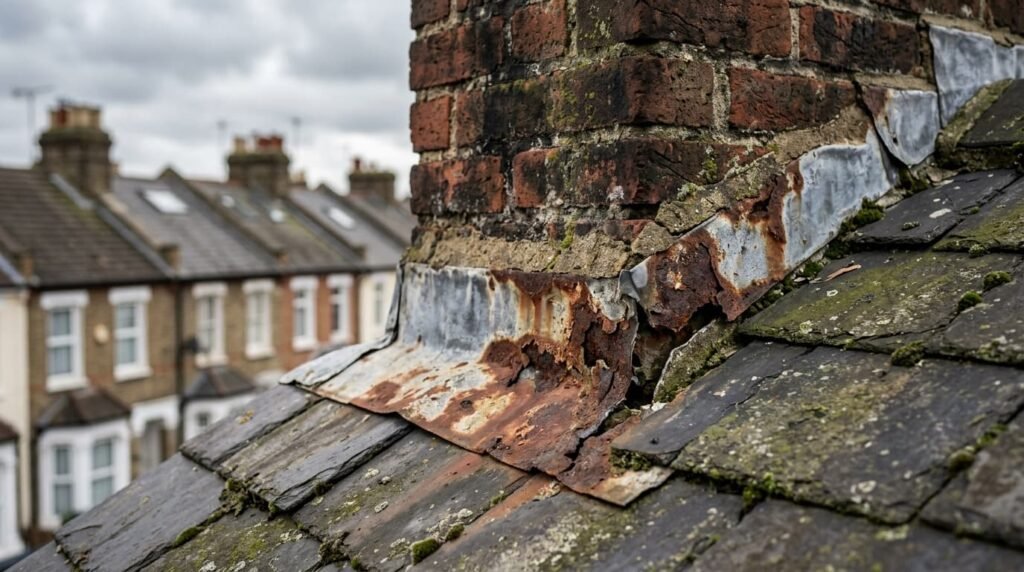
Flashing is the thin metal or plastic that seals joints around chimneys, skylights, and where the roof meets walls. In the UK, lead flashing is common because it lasts for decades. But over time, flashing can crack, corrode, or lift away, especially after storms or freeze-thaw cycles.
Damaged flashing is a leading cause of roof leaks. Water slips behind the tiles at the joint, running down inside the wall or ceiling. You might not see the leak until the damage is serious.
Common Flashing Problems
- Rust and Corrosion: Older metal flashing rusts and loses its seal.
- Cracks: Movement from weather or house settling causes cracks.
- Loose Flashing: Storms and wind can lift flashing away from the roof.
How To Spot It
Check around your chimney or dormers for gaps, lifted edges, or rust streaks. Binoculars can help, but for safety, leave close inspections to a professional.
Example
A homeowner in Camden called us after noticing water marks around her fireplace. The problem was a small crack in the lead flashing—fixed quickly, but left alone, it could have caused major water damage.
Non-obvious Insight
Even tiny gaps in flashing let in surprising amounts of water, especially during a heavy London downpour. Routine checks after storms can catch these problems early.
6. Granules In Gutters Or Around Downpipes
If you notice gritty sand-like material in your gutters or around the base of your downpipes, your roof is sending a warning. Most UK roofs use tiles or slates, but some have mineral-coated felt or asphalt shingles. The granules on these surfaces protect the waterproof layer underneath. When they wash off, your roof ages faster and becomes vulnerable to leaks.
Granule loss often happens as roofs near the end of their lifespan, but heavy storms can speed up the process. You might see dark patches on your roof where granules are missing, or notice the gutter filling up with granules after rain.
Why Granules Matter
- UV Protection: Granules shield the underlying material from sun damage.
- Waterproofing: Once granules are gone, water can soak into the felt or shingle.
- Age Indicator: Granule loss means your roof covering is reaching the end of its life.
What To Do
If you see granules, schedule a roof inspection. Sometimes, only a patch needs replacing, but if many granules are gone, it’s time to consider a new roof or a modern liquid waterproofing system. Denco Liquid Waterproofing specialises in advanced coatings that extend your roof’s life and stop leaks without a full re-roof.
Example
A client in Hampstead had a 20-year-old flat roof. We noticed granule loss during a routine check. Applying a new waterproof coating saved him the cost of a full replacement and added 10+ years of protection.
7. Persistent Leaks Or Dripping Sounds
The most obvious sign is water dripping inside your home. Maybe you hear it at night, see a puddle in the loft, or notice water stains spreading after every rain. Persistent leaks mean the roof’s protective layers have failed, and water is finding a path inside.
Leaks can come from many sources: cracked tiles, failed flashing, blocked valleys, or even damaged underlay. Don’t ignore even a small drip—water always makes damage worse over time.
Immediate Risks
- Ceiling Collapse: Water-soaked plaster can fall suddenly.
- Electrical Hazards: Water can reach wiring, causing shorts or fire risk.
- Mould and Mildew: Dampness spreads quickly, affecting health.
What To Do
Place a bucket to catch drips, but don’t delay repairs. At Denco Liquid Waterproofing, we respond quickly to leaks—often stopping the water the same day and planning a permanent fix.
Non-obvious Insight
Leaks can travel. The spot where water appears inside may be several metres from the actual entry point. Only a trained roofer can trace the path and find the true source.
Comparing Roof Repair Priorities
When you spot a problem, it helps to know which signs need urgent action. Here’s a quick comparison:
| Sign | Urgency Level | Potential Cost if Ignored |
| Missing/Broken Tiles | High | £200–£3,000+ |
| Water Stains | High | £500–£5,000+ |
| Sagging Roof | Very High | £2,000–£10,000+ |
| Moss Growth | Medium | £200–£2,000 |
| Damaged Flashing | High | £500–£3,000 |
| Granules in Gutters | Medium | £1,000–£5,000 |
| Persistent Leaks | Very High | £1,000–£10,000+ |
As you can see, even “medium” problems add up fast if ignored. Early action is always best.
Average Roof Repair Costs In The Uk
Roof repair prices vary by problem, roof type, and location. Here’s a typical range for common repairs:
| Repair Type | Typical Cost (London/UK) | Time to Complete |
| Tile Replacement | £150–£400 | 1–2 hours |
| Flashing Repair | £250–£700 | 2–4 hours |
| Moss Removal | £300–£800 | Half day |
| Leak Investigation & Fix | £400–£1,200 | Half day–1 day |
| Structural Repairs (Sagging) | £2,000–£6,000 | 2–5 days |
| Liquid Waterproofing | £1,000–£3,000 | 1–2 days |
London prices are usually higher, but costs rise everywhere if you wait too long. Getting a trusted local team like Denco Liquid Waterproofing means expert advice and no hidden extras.
Why Choose Denco Liquid Waterproofing?
We’re proud to serve London and the wider UK community. Our team at Denco Liquid Waterproofing believes in honest advice, fair prices, and top-quality work. We use the best materials, from traditional tiles to advanced liquid coatings that last decades. No job is too small—whether you need a single tile fixed or a full roof overhaul, we’re here to help.
Clients love our clear communication and fast response. We treat every home as if it’s our own, because we know how important it is to feel safe and dry, no matter the weather. That’s why so many UK families trust us year after year.
What Makes Uk Roofs Different?
Roofs in Britain face unique challenges. Our climate is wet and windy, and many homes have steep, tiled roofs or flat felt coverings. Here are some things that make UK roofs special:
- Steep Slopes: Help shed heavy rain but increase wind lift risk.
- Clay and Slate Tiles: Beautiful, but more fragile than concrete.
- Flat Roofs: Common on extensions and garages, more prone to pooling water.
Understanding these factors helps us recommend the right repair or upgrade for your home.
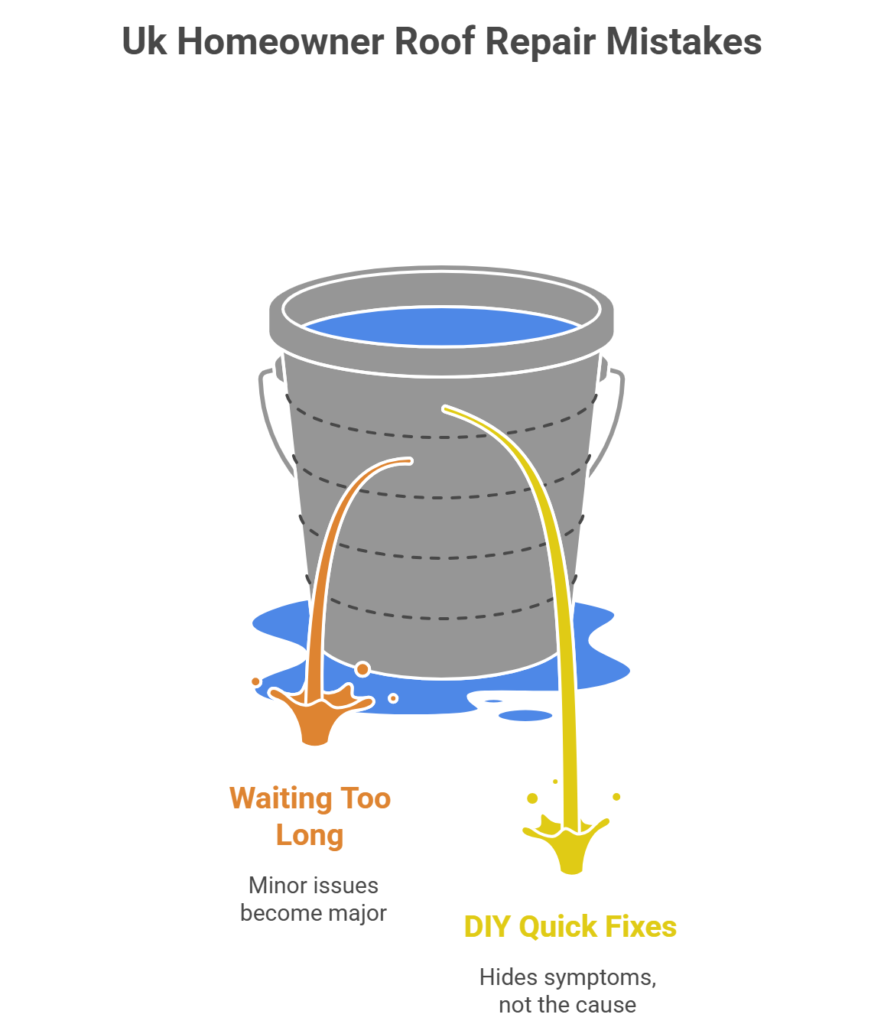
Two Mistakes Uk Homeowners Often Make
Waiting Too Long: Many people hope minor problems will fix themselves, or they put off repairs due to cost. But roof issues never get better on their own—they always get worse, especially with the UK’s wet winters.
DIY Quick Fixes: Trying to patch a leak with tape or sealant from the hardware shop rarely works for long. You might hide the symptom but not the cause. In the end, you’ll spend more fixing the bigger problem.
How To Check Your Roof Safely
You don’t need to climb a ladder to check for problems. Here’s what I advise:
- Walk around your house after a storm. Look for fallen tiles, moss on the ground, or blocked downpipes.
- Use binoculars to check for uneven lines, missing tiles, or damaged flashing.
- Check inside your loft for damp patches, stains, or sunlight coming through.
- Listen for drips during heavy rain—water sounds mean action is needed.
- Check gutters for granules, moss, or blockages.
If you spot anything unusual, call a professional roofer. It’s safer and will save you money in the long run.
How Denco Liquid Waterproofing Can Help
From our London base, we cover everything from emergency leak repairs to complete roof upgrades. We offer:
- Free roof health checks for peace of mind
- Fast callouts for leaks and storm damage
- Long-lasting liquid waterproofing for flat or pitched roofs
- Moss removal and anti-moss treatments
- Detailed, honest quotes with no surprises
Our goal is to keep your home dry, safe, and looking its best—so you can relax, rain or shine.
If you want to read more about roof types and maintenance, the Wikipedia Roof page has useful background info.
What’s The Best Way To Fix A Flat Roof Leak?
Modern liquid waterproofing systems are ideal for UK flat roofs. They seal leaks, last for years, and can often be applied over existing coverings. Denco Liquid Waterproofing specialises in these solutions.
—
If you’re worried about your roof, don’t wait for the next downpour. Call Denco Liquid Waterproofing for a free, honest assessment. We love serving UK homes and will keep your roof strong for years to come.
All You Need to Know
What Is The Most Common Roof Problem In The Uk?
The most common problems are broken or missing tiles, especially after storms. Damaged flashing and moss growth are also frequent, due to the wet British climate.
How Often Should I Have My Roof Checked?
It’s wise to have your roof inspected every 2–3 years, or after severe storms. Regular checks catch problems early, saving money and stress.
Can I Repair My Own Roof?
Small jobs like clearing gutters are safe for most people, but tile replacement, flashing repairs, and leak fixes should be left to professionals. Roof work is dangerous and mistakes can be costly.
Does Moss Always Mean My Roof Needs Repair?
Not always, but moss holds moisture and can damage tiles over time. Removing moss and treating the roof prevents future leaks.