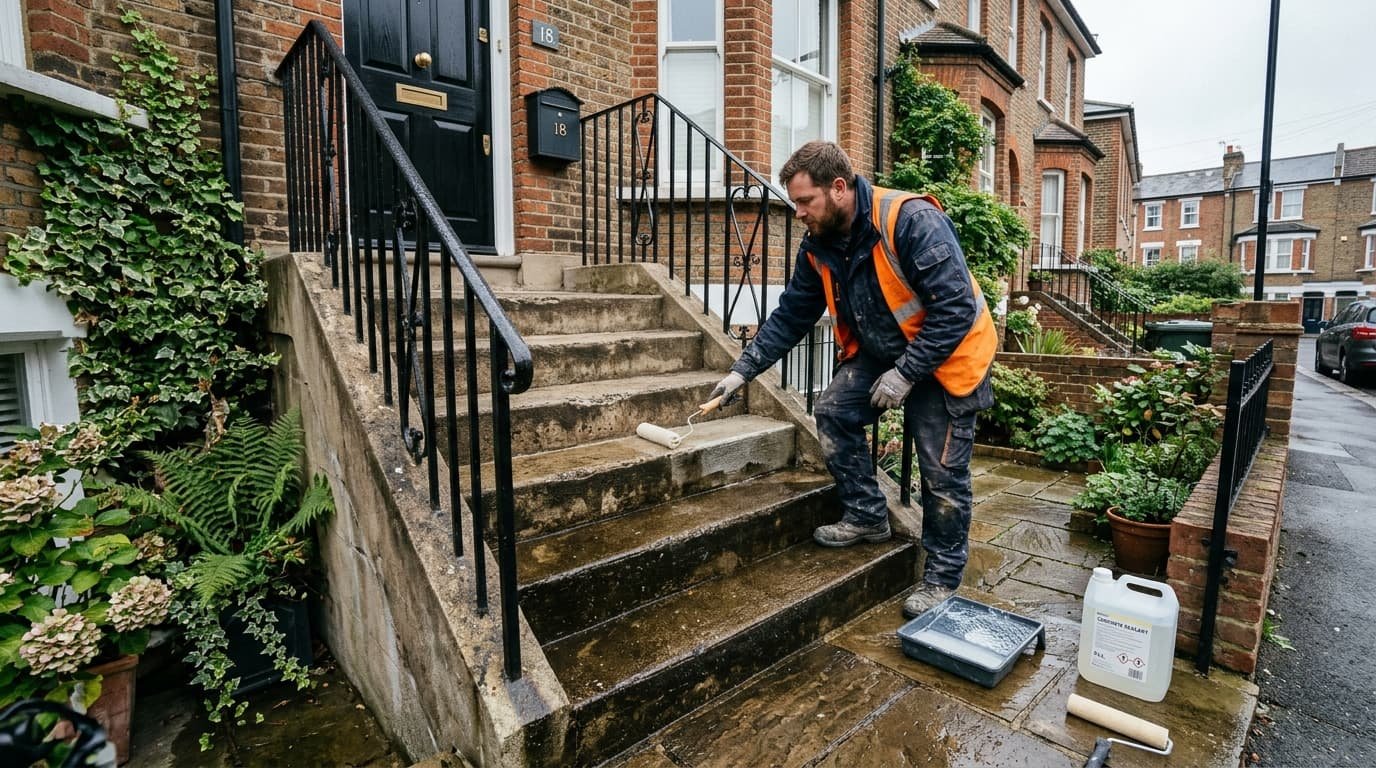
If you live in London, you know how unpredictable the weather can be. Rain, frost, and heavy foot traffic can quickly damage your outdoor concrete stairs. Sealing them isn’t just for looks. It protects your investment and keeps your home safe. As professional step sealers at Denco Liquid Waterproofing, we’ve helped homeowners across London and the UK with reliable waterproofing solutions. In this guide, you’ll find all you need to seal your outdoor concrete stairs in London. We’ll guide you on picking the right products and provide step-by-step instructions. You’ll achieve lasting results.
Why Seal Concrete Stairs Outside?
London’s climate puts outdoor stairs at risk. Water can seep into cracks, freeze, and expand—making the damage worse. Sealing your stairs is a simple way to prevent costly repairs, slipping hazards, and ugly stains.
Main benefits of sealing concrete stairs:
- Waterproofing: Keeps rain and moisture out.
- Protection from stains: Stops oil, dirt, and leaf marks.
- Prevents cracking: Reduces freeze-thaw damage.
- Improves safety: Non-slip sealers can help avoid falls.
- Easy cleaning: Sealed surfaces resist dirt and algae.
- Better appearance: Fresh, glossy finish looks great.
Many people underestimate how quickly untreated concrete can fail. London’s winters are harsh, and even a few months of rain can cause cracks and chips. Sealing is a small investment for a big return.
What You Need Before Sealing
Getting ready is just as important as sealing itself. You want your stairs to stay protected for years, not just months.
Gather these supplies:
- Concrete cleaner or degreaser
- Pressure washer or stiff brush
- Crack repair filler
- Concrete sealant (choose the right type—see below)
- Paint roller or sprayer
- Protective gloves and mask
- Painter’s tape and plastic sheets
- Non-slip additive (optional)
Don’t skip cleaning. Dirt and old stains can stop the sealer from bonding. If you seal over grease, algae, or dust, the job won’t last.
Choosing The Right Concrete Sealant
Not all sealers are the same. Some are designed for indoor use, others for outdoor stairs. In London, you need sealers that handle rain, frost, and heavy use.
Three main types of concrete sealants:
| Type | Best For | Protection Level | Finish |
| Penetrating Sealers | Waterproofing, anti-slip | High | Natural, invisible |
| Acrylic Sealers | Glossy look, easy cleaning | Medium | Gloss or satin |
| Epoxy/Urethane Sealers | Heavy traffic, long-lasting | Very High | Glossy or semi-gloss |
Penetrating sealers are best for London’s climate. They soak into the concrete and block water without changing the look. Acrylic sealers add shine but can be slippery when wet. Epoxy sealers are tough, but usually more expensive and best for commercial stairs.
If you want a natural finish and strong waterproofing, we recommend penetrating sealers. For a shiny look, acrylics work well—just add a non-slip additive.
How Weather Affects Sealing In London
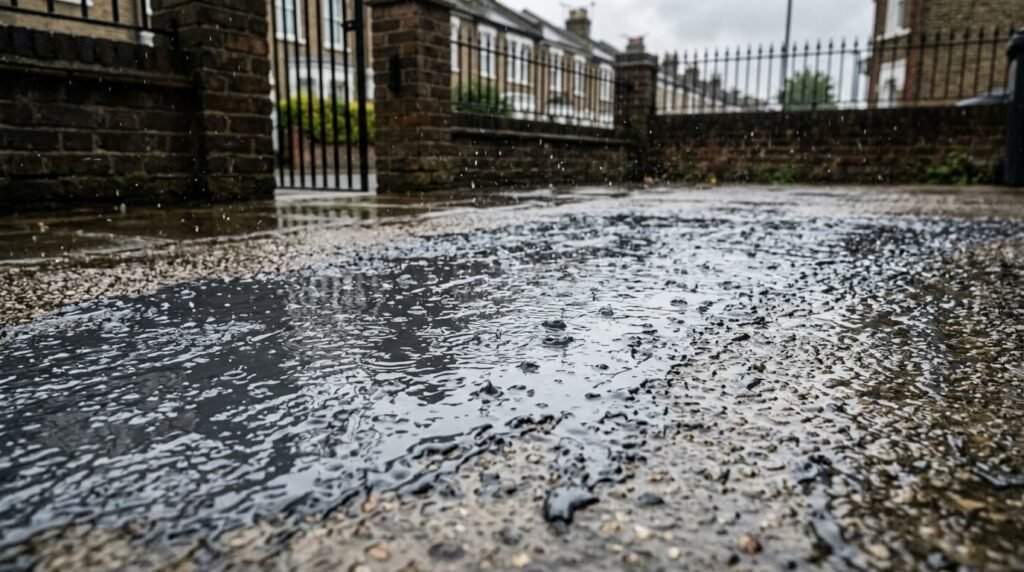
London’s weather is unique. Rain is frequent, humidity is high, and sudden temperature changes are common. This affects when and how you seal your stairs.
Tips for timing your sealing:
- Seal on a dry day (no rain for 24 hours before/after)
- Avoid sealing when temperatures are below 10°C
- Pick a week with low humidity (less than 60%)
- Check the forecast carefully
If you seal when it’s too cold or damp, the sealer won’t cure properly. That means weaker protection and wasted effort. As pros at Denco Liquid Waterproofing, we always monitor the weather before starting any job.
Step-by-step: How To Seal Concrete Stairs Outside Your House
Ready to start? Here’s the full process we use for sealing outdoor concrete stairs across London.
1. Clean The Stairs Thoroughly
Dirt, grease, moss, and old stains must go. Cleaning is key for strong bonding.
- Sweep off loose debris
- Apply concrete cleaner or degreaser
- Scrub with a stiff brush or use a pressure washer
- Rinse and let dry fully (24–48 hours)
Pro tip: Don’t rush drying. Moisture trapped in the concrete can ruin your sealing job.
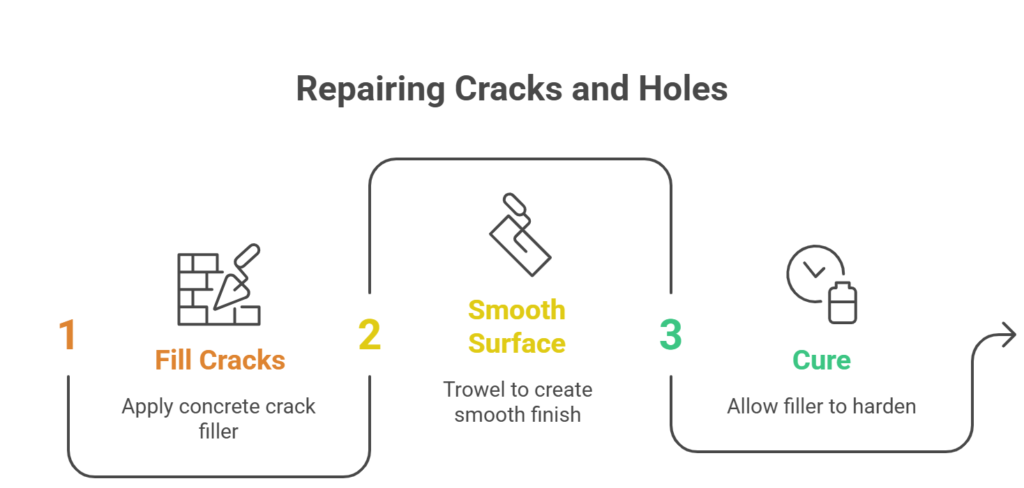
2. Repair Any Cracks Or Holes
Even small cracks let water in. Fill them before sealing.
- Use a concrete crack filler
- Follow instructions for mixing and applying
- Smooth out with a trowel
- Let cure as recommended (usually 24 hours)
Pro insight: Many beginners skip crack repair. But even tiny gaps can lead to big problems. Always fix cracks first.
3. Protect Surrounding Areas
Sealers can drip or splash. Cover nearby walls, doors, and plants.
- Use painter’s tape and plastic sheets
- Mask any edges you don’t want sealed
4. Apply The Sealer
Read your product label. Each sealer has specific instructions.
- Pour sealer into a paint tray
- Use a roller for flat areas
- Use a brush for corners and edges
- Apply thin, even coats
- For sprayers: Use steady, overlapping strokes
Pro tip: Don’t over-apply. Thick layers can crack or peel. Two thin coats are usually better than one thick coat.
5. Add Non-slip Additive (optional)
If you want extra safety, mix in a non-slip additive.
- Add to your sealer as directed
- Stir well before applying
This is very useful for stairs that get wet or icy.
6. Let It Cure
Most sealers need at least 24–48 hours to fully cure.
- Keep people and pets off the stairs
- Avoid water or heavy traffic
- Wait until the sealer is dry and hard
Real-world tip: Don’t rush reopening your stairs. If you walk on them too soon, you may ruin the finish.
7. Inspect And Touch Up
Check for missed spots, bubbles, or streaks.
- Apply a second coat if needed
- Touch up edges and corners
A careful inspection makes your work last longer.
Common Mistakes And How To Avoid Them
Even experienced DIYers can make errors. Here are mistakes we see most often—and how you can avoid them.
- Sealing over dirty concrete: Always clean thoroughly. Dirt stops sealer from bonding.
- Skipping crack repairs: Fill all cracks, even small ones.
- Not checking weather: Rain or cold can ruin your sealing job.
- Using the wrong sealer: Choose a product for outdoor use and London’s climate.
- Applying too much sealer: Thick coats peel, thin coats last longer.
- Not using non-slip additive: Safety matters, especially in wet weather.
- Ignoring drying time: Let each layer cure fully before using the stairs.
Avoid these, and your stairs will stay strong and beautiful for years.
Comparing Sealant Brands For London Conditions
Choosing the right brand can make a big difference. Here’s a comparison of popular sealant brands used by professionals in London.
| Brand | Type | Weather Resistance | Finish | Price (per litre) |
| Everbuild | Penetrating | High | Natural | £12 |
| Ronseal | Acrylic | Medium | Gloss | £15 |
| Sika | Epoxy | Very High | Gloss | £24 |
| Thompson’s | Penetrating | High | Invisible | £10 |
| Denco Liquid Waterproofing | Professional Grade Penetrating | Very High | Natural | £20 |
Denco Liquid Waterproofing offers professional-grade sealers tested for London’s wet and cold climate. You get longer-lasting results and better protection.
How Often Should You Seal Concrete Stairs?
Sealing isn’t a one-time job. Weather, foot traffic, and age all affect how often you need to reseal.
General guidelines:
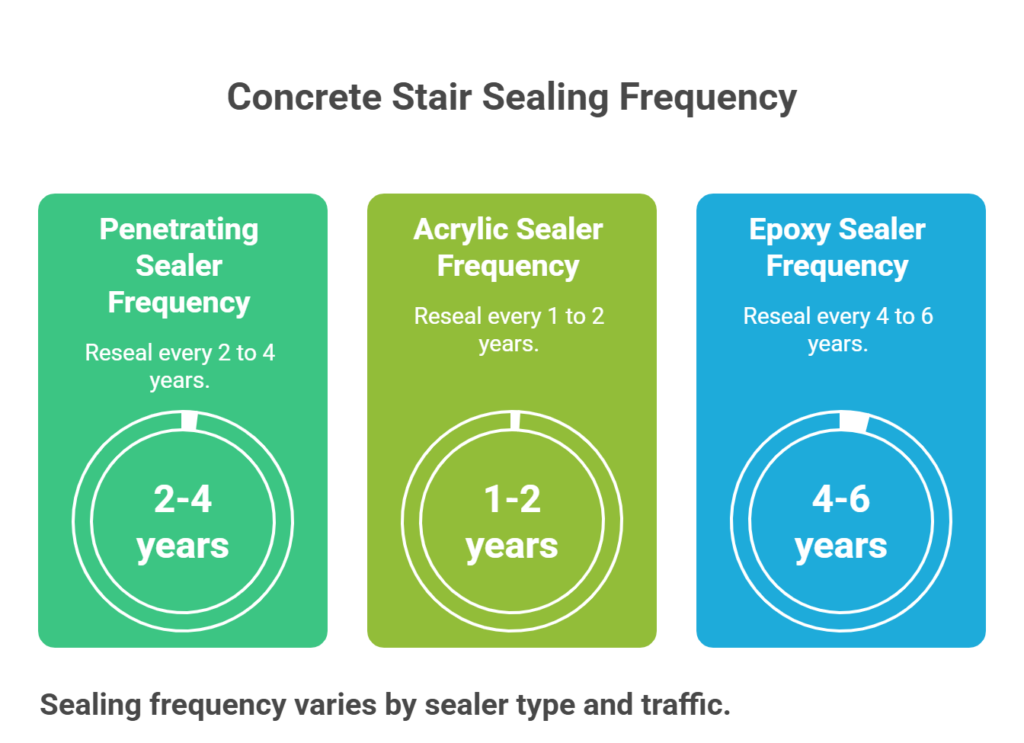
- Penetrating sealers: Every 2–4 years
- Acrylic sealers: Every 1–2 years
- Epoxy sealers: Every 4–6 years
High-traffic stairs may need sealing more often. If you notice water soaking in, fading, or slippery surfaces, it’s time to reseal.
Professional Vs. Diy Sealing: What’s Best For London Homes?
Many homeowners want to seal stairs themselves. That’s fine for smaller jobs. But for bigger or complex stairs, professional sealing is often safer and more effective.
DIY sealing advantages:
- Lower cost
- Flexible timing
- Personal satisfaction
Professional sealing advantages:
- Expert results
- Stronger protection
- Faster completion
- Custom options (non-slip, coloured finishes)
At Denco Liquid Waterproofing, we use commercial-grade products and proven methods. We guarantee waterproofing and non-slip finishes that last. If you want peace of mind, consider professional help.
Maintenance Tips After Sealing
Once your stairs are sealed, proper care keeps them looking good and working well.
Simple maintenance tips:
- Sweep off leaves and debris regularly
- Wash stairs with mild soap every few months
- Avoid harsh chemicals or pressure washing
- Check for cracks or wear yearly
- Reseal as needed (see above)
Non-obvious tip: Avoid using salt or de-icers in winter. These can damage sealed concrete and reduce protection.
Real-life Example: Sealing Concrete Stairs In London
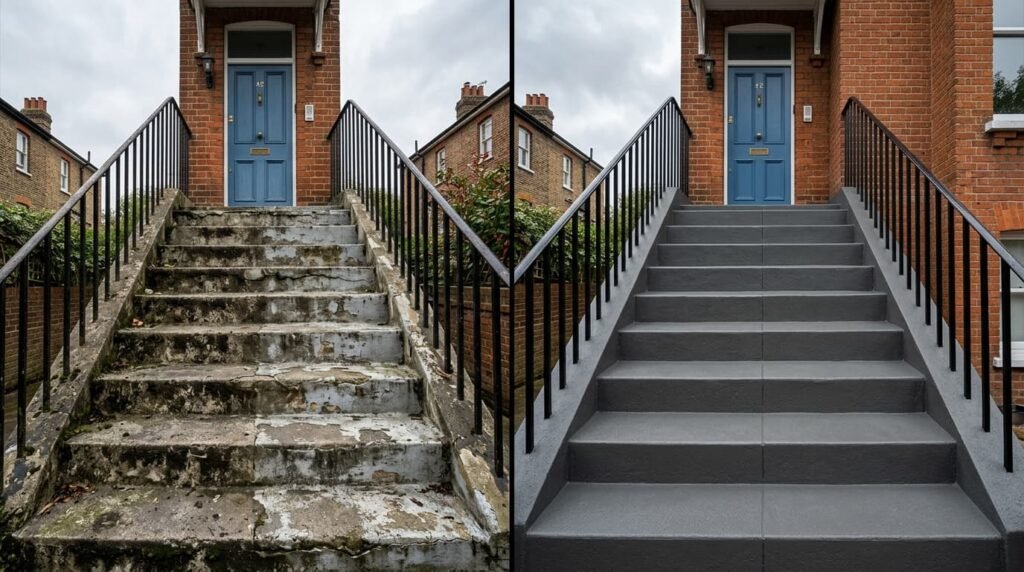
One of our customers in South London had outdoor concrete stairs leading to their basement. Rainwater was causing algae growth and slippery surfaces. Cracks were starting to show.
We cleaned the stairs with a pressure washer, filled all cracks, and masked the surrounding brickwork. We applied two coats of our professional-grade penetrating sealer with a non-slip additive. The stairs dried in 48 hours, and the finish was natural but waterproof.
Six months later, the stairs looked as good as new. No algae, no slippery spots, and no new cracks. The customer was happy—and so were we.
Sealing Concrete Stairs: Cost Breakdown
How much does sealing cost? Here’s a rough breakdown for a typical London home (5–10 stairs):
DIY cost:
- Cleaner and degreaser: £10–£15
- Crack filler: £8–£12
- Sealer (5 litres): £50–£100
- Tools and tape: £20–£30
- Total: £90–£155
Professional cost (Denco Liquid Waterproofing):
- Inspection and cleaning: £50–£80
- Crack repair: £30–£60
- Sealing (including non-slip): £150–£250
- Total: £230–£390
Pro insight: Professional sealing saves you time and gives longer-lasting protection. DIY is cheaper, but can cost more if mistakes are made.
Environmental Impact Of Sealing Concrete
Many London homeowners want eco-friendly solutions. Sealing helps reduce water damage and extends the life of your stairs, which means less waste.
Eco-friendly tips:
- Use water-based, low-VOC sealers
- Clean stairs with mild, biodegradable soap
- Avoid harsh chemicals or solvents
At Denco Liquid Waterproofing, we use eco-friendly sealers that protect your stairs and the planet.
Safety Considerations For Sealed Stairs
Safety is key, especially for families and older adults.
Important safety tips:
- Always add a non-slip additive to shiny sealers
- Test stairs after curing—walk carefully first
- Mark newly sealed stairs with tape if drying
Non-obvious tip: Some sealers are slippery when wet, even if they look rough. Always check the product label and ask for non-slip versions.
When To Call A Professional
If your stairs are heavily damaged, large, or complex, professional help is best.
Call a pro if:
- Cracks are deep or wide
- Stairs are uneven or sinking
- You want coloured or decorative finishes
- You need fast, guaranteed results
Denco Liquid Waterproofing offers free inspections and quotes across London. We handle everything—from cleaning to sealing and maintenance.
A Final Word From Denco Liquid Waterproofing
Sealing your concrete stairs outside is more than a DIY task—it’s a smart way to protect your home and stay safe. London’s weather is tough, but with the right products and proper steps, your stairs will stay strong, beautiful, and waterproof for years. If you want professional results, reach out to Denco Liquid Waterproofing. We offer expert sealing and waterproofing services across London and the UK.
For more about concrete sealing and waterproofing, visit Wikipedia—and remember, your stairs deserve the best protection possible.
All You Need To Know
How Long Does Sealed Concrete Stairs Last?
Properly sealed stairs last 2–6 years, depending on the type of sealer and foot traffic. Penetrating sealers last longer than acrylics.
Can I Seal My Stairs During Winter In London?
No. Cold, wet weather prevents the sealer from curing. Wait for dry days with temperatures above 10°C.
Are Sealed Stairs Slippery When Wet?
Some sealers can be slippery, especially acrylics. Add a non-slip additive for extra safety. Penetrating sealers are usually less slippery.
How Do I Clean Sealed Concrete Stairs?
Sweep regularly. Wash with mild soap and water. Avoid harsh chemicals and pressure washing, which can damage the seal.
What’s The Best Sealer For London’s Climate?
Penetrating sealers work best for waterproofing and durability in London’s wet, cold climate. Brands like Denco Liquid Waterproofing are tested for local conditions.