
Are you struggling to choose the best waterproofing solution for your flat roof in the UK? With so many options available, it’s easy to feel overwhelmed.
Two popular choices are bituminous membranes and liquid waterproofing. But which one truly protects your roof better? This article will break down the pros and cons of each method in simple terms. By the end, you’ll know exactly which option suits your needs, budget, and peace of mind.
Keep reading to make a smart, confident decision for your home or business.
Bituminous Membrane Basics
Choosing the right waterproofing method for flat roofs in the UK is important. Both bituminous membranes and liquid waterproofing are popular options. Understanding their basics helps make a good choice. Bituminous membranes are widely used for flat roof protection. They offer a strong barrier against water and weather. This section explains the key details about bituminous membranes.
Material Composition
Bituminous membranes are made from bitumen, a sticky, black substance. Bitumen comes from crude oil and is known for being water-resistant. These membranes often include a base layer for strength. Common base materials include:
- Polyester mat: Adds flexibility and durability.
- Fibreglass mat: Provides extra strength and stability.
- Sanded surface: Protects the membrane from UV rays and damage.
The top surface can have mineral granules or reflective coatings. These protect the membrane from heat and sunlight. Bituminous membranes may be self-adhesive or need heat to stick. Their composition makes them tough against water and weather changes.
Installation Process
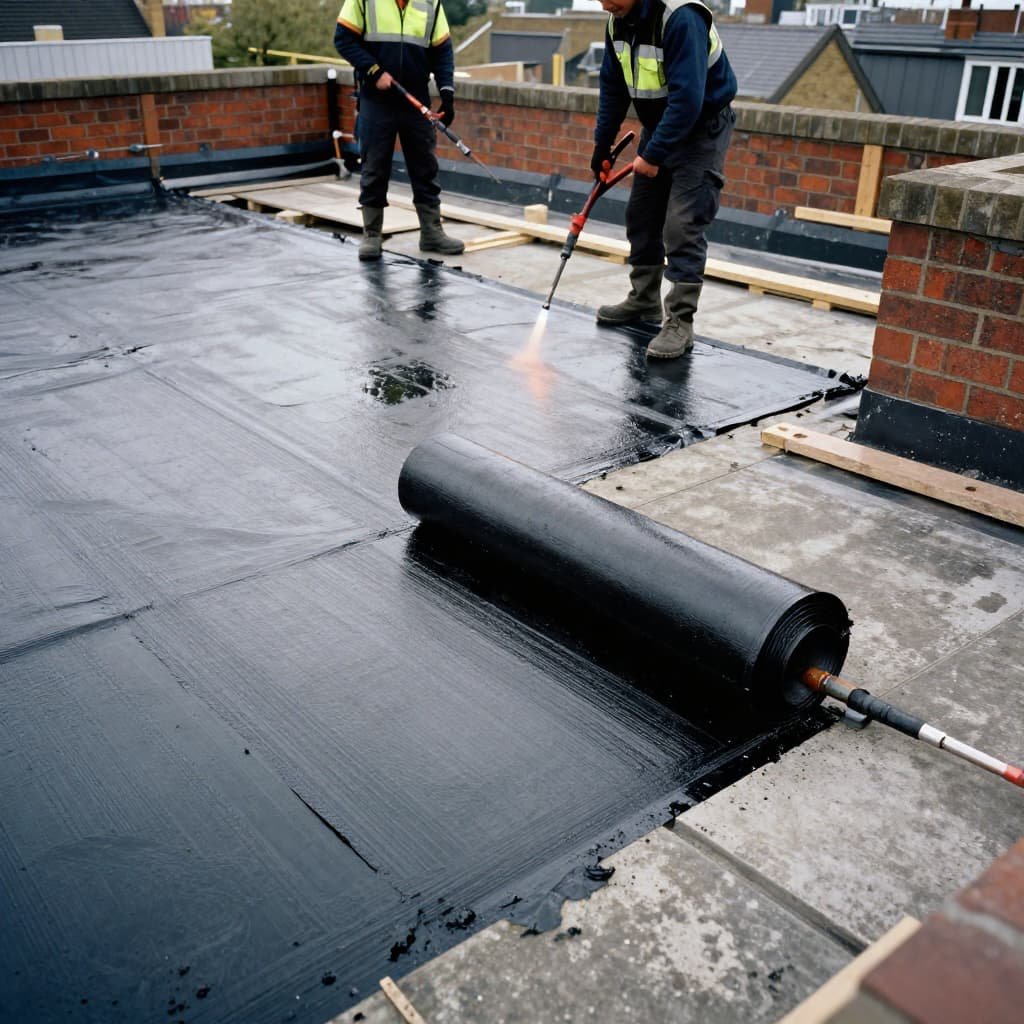
Installing bituminous membranes requires careful preparation. The roof surface must be clean, dry, and smooth. Any cracks or holes need fixing before starting.
The installation steps usually include:
- Priming the roof: A primer is applied to improve adhesion.
- Heating the membrane: Using a torch to melt the bitumen for sticking.
- Rolling out the membrane: Placing it carefully to avoid wrinkles or bubbles.
- Sealing joints: Overlapping edges and sealing them to prevent leaks.
The process requires skill and safety measures, especially when using a torch. Some membranes come with self-adhesive backing for easier installation. This method is less risky and faster but may cost more.
Durability And Lifespan
Bituminous membranes are known for their strong durability. They resist water, heat, and cold well. This makes them suitable for the UK’s changing weather.
Bituminous membranes may need repairs after 15-20 years. With good care, they can last longer. Their strength and water resistance make them a trusted choice for flat roofs.
Liquid Waterproofing Essentials
Flat roofs in the UK need strong protection from water. Two main choices for waterproofing are bituminous membranes and liquid waterproofing. Both have good qualities. Bituminous membranes are sheets that stick on the roof. Liquid waterproofing is a paint-like layer that forms a seal. Knowing about liquid waterproofing helps to decide if it fits your roof. This guide covers the main facts about liquid waterproofing essentials.
Types Of Liquid Coatings
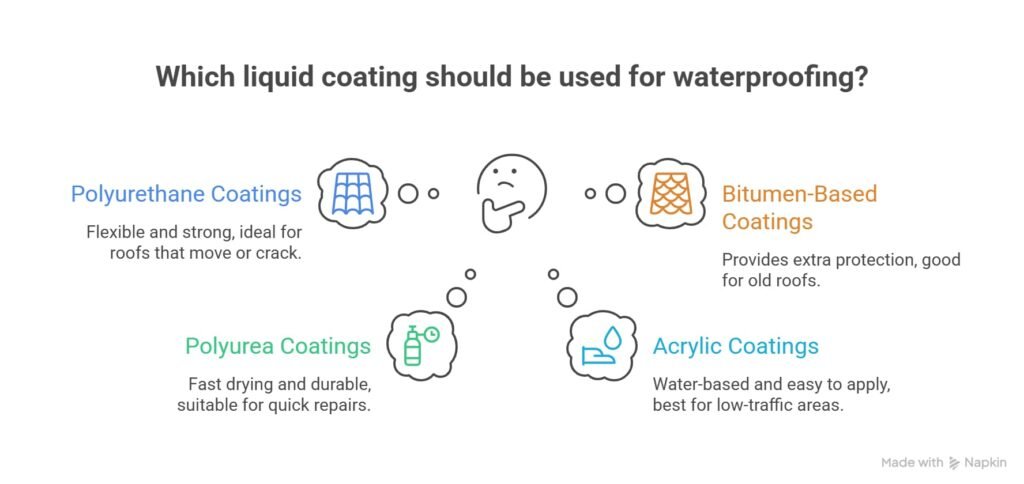
Liquid waterproofing uses different coatings. Each type works well in certain cases. Here are the common types:
- Polyurethane Coatings: Very flexible and strong. Good for roofs that move or crack.
- Polyurea Coatings: Fast drying and very durable. Often used on places with quick repairs needed.
- Acrylic Coatings: Water-based and easy to apply. Best for areas with less foot traffic.
- Bitumen-Based Coatings: Made from bitumen but liquid form. Good for extra protection on old roofs.
Each coating has different costs, drying times, and life spans. The choice depends on roof needs and budget.
Application Techniques
Applying liquid waterproofing correctly is very important. The roof must be clean and dry before starting. Here are common ways to apply liquid coatings:
- Brush or Roller: Good for small or detailed areas. Offers control on thickness.
- Spraying: Faster for large roofs. Creates an even layer but needs more skill.
- Troweling: Used for thick coats or special mixes. Adds extra strength.
Usually, two or more layers are needed. Each layer must dry well before the next one. Weather conditions like rain or cold can affect drying time.
Flexibility And Coverage
Liquid waterproofing is known for its flexibility. It can stretch and move with the roof. This helps prevent cracks and leaks over time.
Coverage depends on the coating type and roof surface. Most liquid coatings cover between 1 to 2 square meters per litre. Applying the right thickness is key for good protection.
| Coating Type | Typical Coverage (m² per litre) | Flexibility Level |
| Polyurethane | 1.5 – 2.0 | High |
| Polyurea | 1.2 – 1.8 | Very High |
| Acrylic | 1.8 – 2.2 | Medium |
| Bitumen-Based | 1.0 – 1.5 | Low to Medium |
Choosing a flexible coating helps keep the roof safe from damage. Good coverage means less chance for water to get in.
Performance On Flat Roofs
Choosing the right waterproofing for flat roofs in the UK is very important. Two common options are bituminous membranes and liquid waterproofing. Both help keep water out but work in different ways. Understanding their performance on flat roofs helps in making a good choice. This guide covers water resistance, UV protection, weather protection, and thermal changes.
Water Resistance
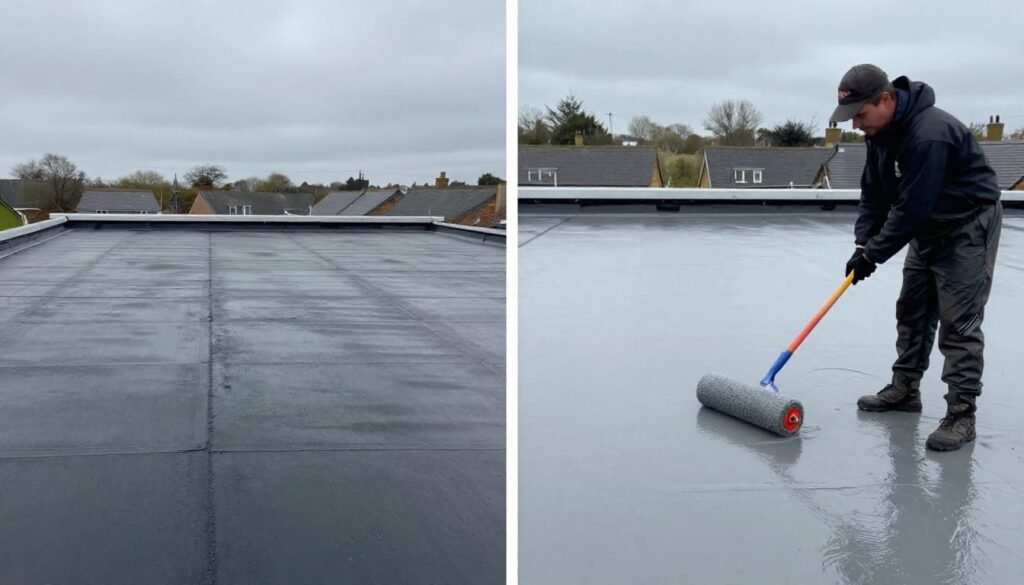
Bituminous membranes are made from asphalt and are very good at stopping water. They come in sheets that are rolled out and sealed onto the roof surface. This creates a strong barrier against rain and puddles. The layers overlap, which helps prevent leaks.
Liquid waterproofing is a thick, paint-like material. It is applied in one or more coats directly onto the roof. Once dry, it forms a seamless, flexible layer that stops water from passing through.
- Bituminous membranes are tough and have a long history of use.
- Liquid waterproofing adapts well to roof shapes and details.
- Both types resist water well, but membranes rely on perfect sealing of joints.
- Liquid systems avoid joints, reducing leak risks.
| Feature | Bituminous Membrane | Liquid Waterproofing |
| Water Barrier | Sheet form with overlaps | Seamless, painted layer |
| Leak Points | Joints and seams | No joints, low risk |
| Durability Against Water | High | High |
Uv And Weather Protection
The UK weather can be harsh, with sun, rain, wind, and cold. Materials must protect roofs from these conditions.
Bituminous membranes often have a top layer that resists UV rays. This keeps the membrane from breaking down under sunlight. Some membranes have granules or a reflective coating to improve protection.
Liquid waterproofing coatings usually contain UV blockers. They stay flexible and do not crack easily under sun exposure. This helps the roof last longer.
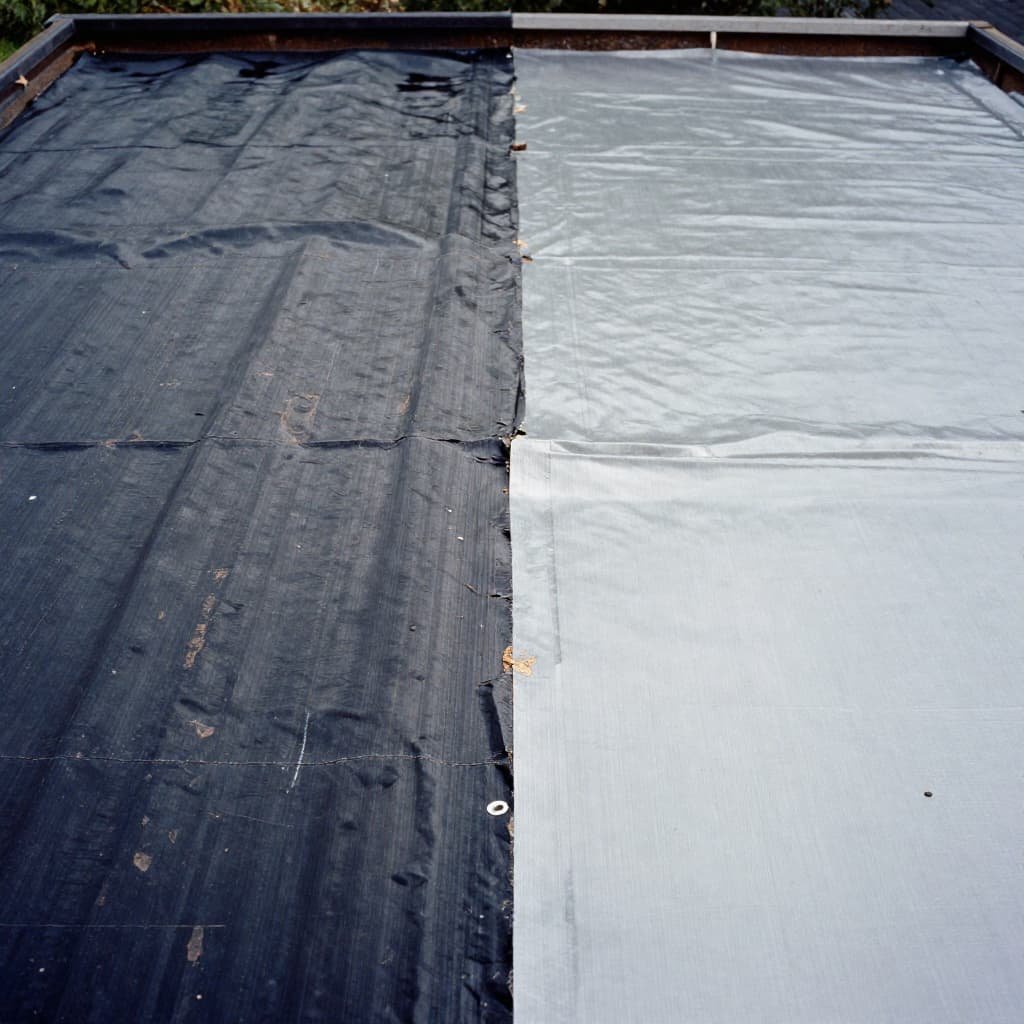
- Bituminous membranes can become brittle if exposed too long without protection.
- Liquid systems maintain flexibility and resist weather changes well.
- Both types need regular checks to catch damage early.
Thermal Expansion Handling
Flat roofs expand and contract with temperature changes. Waterproofing must handle this movement without damage.
Bituminous membranes are somewhat flexible but can become rigid over time. This rigidity may cause cracks if the roof moves a lot.
Liquid waterproofing is more elastic. It stretches and moves with the roof, reducing the chance of cracks and leaks.
- Membranes are best on roofs with less movement.
- Liquid systems suit roofs with more thermal changes.
- Proper installation is key for both types to perform well.
Cost Comparison
Choosing the right waterproofing for a flat roof in the UK is important. Two common options are bituminous membrane and liquid waterproofing. Both shield roofs from water damage. However, they vary in cost, upkeep, and long-term value. Understanding these differences helps in making a smart choice. This section looks at the cost comparison of these two methods.
Initial Investment
Bituminous membrane usually needs more money upfront. It involves materials like asphalt sheets, which are thick and heavy. Installation requires special equipment and skills. This raises labour costs. The process can take more time, adding to expenses.
Liquid waterproofing has a lower initial cost. It uses liquid coatings that are easier to apply. This means fewer workers and less time on the job. The materials are cheaper and simpler to handle.
- Bituminous membrane: Higher material cost, complex installation, more labour required.
- Liquid waterproofing: Lower material cost, easy application, less labour.
| Type | Material Cost | Labour Cost | Installation Time |
| Bituminous Membrane | High | High | Long |
| Liquid Waterproofing | Low | Low | Short |
Maintenance Expenses
Bituminous membranes need regular checks. Cracks or bubbles may appear over time. Repairs can be costly and need expert help. If not fixed, water can cause big damage.
Liquid waterproofing requires less upkeep. It forms a seamless layer that resists cracks. Minor damage is easier to fix with a new liquid coat. This can be done quickly without special tools.
- Bituminous membrane: Needs frequent inspection, costly repairs, skilled labour.
- Liquid waterproofing: Low maintenance, easy repairs, less cost.
Long-term Value
Bituminous membranes last 15 to 20 years. They give strong protection but may need big repairs near the end. Their heavy weight can stress the roof structure.
Liquid waterproofing lasts about 10 to 15 years. It is flexible and adapts to roof movement. Recoating extends its life without removing old layers. This saves time and money.
- Bituminous membrane: Longer life, strong protection, heavy, costly repairs later.
- Liquid waterproofing: Shorter life, flexible, easy to renew, cost-effective.
Environmental Impact
When deciding between bituminous membrane and liquid waterproofing for flat roofs in the UK, many factors come into play. One important factor is how each option affects the environment. Both materials protect roofs from water damage but differ in their environmental impact. Understanding this impact helps make a better choice for long-term use and sustainability.
Material Sustainability
Bituminous membranes are made from asphalt mixed with fibres. These materials come from fossil fuels. This means they rely on non-renewable resources. The production process uses a lot of energy and creates emissions.
Liquid waterproofing usually uses polymers like acrylic or polyurethane. These are synthetic but sometimes have lower environmental footprints than bitumen. Many liquid products are water-based, reducing harmful fumes during application.
- Bituminous membranes: Non-renewable materials, higher energy use, and emissions.
- Liquid waterproofing: Synthetic polymers, some water-based options, less odour.
- Both options: Not fully natural but vary in how they impact resources.
Choosing materials that last longer helps reduce waste and resource use. Bituminous membranes often last many years but can be brittle in cold weather. Liquid waterproofing can be flexible and repairable, which may extend roof life.
Energy Efficiency
Energy efficiency means how much energy is saved or used by the roofing system. Flat roofs with good waterproofing help keep buildings warm in winter and cool in summer. This reduces heating and cooling needs.
Bituminous membranes are usually dark and absorb heat. This can increase cooling costs in summer. Some bitumen products have reflective coatings to reduce heat absorption.
Liquid waterproofing coatings can be made with reflective materials. These reflect sunlight and keep roofs cooler. Cooler roofs help lower energy bills and reduce the urban heat island effect.
Both materials can improve energy efficiency if chosen carefully. Reflective coatings on either type help reduce building energy use.
Disposal And Recyclability
Disposing of old roofing materials impacts the environment. Bituminous membranes are hard to recycle. They often end up in landfill, where they take a long time to break down.
Some recycling programs exist for bitumen, but they are limited and costly. Removing and disposing of bitumen membranes can produce harmful fumes.
Liquid waterproofing creates less waste because it forms a thin, seamless layer. Repairing it is easier, so less material is removed over time.
- Bituminous membrane disposal: Difficult to recycle, landfill common.
- Liquid waterproofing disposal: Minimal waste, easier repairs.
- Environmental risk: Bitumen may release harmful chemicals if burned.
Choosing materials with better disposal options helps protect the environment. Liquid waterproofing tends to create less waste and pollution at the end of its life.
Suitability For Uk Climate
Choosing the right waterproofing for a flat roof in the UK is important. Bituminous membranes and liquid waterproofing are two popular options. Both have strengths and weaknesses. The UK’s weather can be wet, cold, and windy. You need to choose a waterproofing method that works well in these conditions. Knowing how these methods fit the UK climate helps you make the right choice.
Rainfall And Moisture Levels
The UK experiences frequent rainfall and high moisture levels throughout the year. Flat roofs need to resist water penetration effectively to avoid leaks and damage. Bituminous membranes offer a thick, continuous barrier against water. They are made from asphalt-based materials, which are very water-resistant.
Liquid waterproofing creates a seamless, flexible coating. It fills cracks and gaps, making it hard for water to seep through.
- Bituminous membranes are excellent for heavy, constant rain.
- Liquid waterproofing adapts well to small surface irregularities.
- Both methods need proper installation to work well under wet conditions.
Temperature Variations
The UK climate shows wide temperature changes from winter to summer. Waterproofing materials must handle these shifts without cracking or peeling. Bituminous membranes can become brittle in cold weather. This may cause cracks over time. In warmer weather, they soften but usually remain strong.
Liquid waterproofing remains flexible in cold and hot temperatures. It expands and contracts with the roof surface. This flexibility reduces the risk of damage caused by temperature changes.
- Bituminous membranes need good quality materials to resist cold brittleness.
- Liquid waterproofing suits roofs with large temperature swings.
- Both require regular inspection to catch early signs of wear.
Wind And Storm Resistance
Strong winds and storms are common in the UK. Flat roofs must stay secure against wind uplift and heavy rain. Bituminous membranes are heavy and adhere strongly to the roof. This helps them resist being lifted by wind. They form a tough, durable layer that stands up to storms.
Liquid waterproofing creates a continuous, bonded layer. It reduces the chance of wind lifting the material from the roof. Its flexible nature helps absorb wind pressure without damage.
- Bituminous membranes offer high resistance to wind uplift.
- Liquid waterproofing bonds well to different surfaces for storm resistance.
- Proper roof design and installation improve both types’ wind resistance.
Installation Challenges
Choosing between a bituminous membrane and liquid waterproofing for flat roofs in the UK depends on several factors. One key aspect is the installation challenges. Each method has its own requirements and difficulties. Understanding these can help decide which suits your roof best. Installation affects the quality and durability of the waterproofing.
Skill Requirements
Bituminous membrane installation demands skilled workers. They must handle heating tools and apply the membrane evenly. Incorrect application can lead to leaks and damage. The process needs steady hands and experience with roofing materials.
Liquid waterproofing requires a different skill set. It involves applying liquid coatings with brushes or rollers. The surface must be clean and dry for good adhesion. Workers need to understand drying times and layering techniques.
Timeframe
Bituminous membrane installation usually takes longer. It requires heating and careful placement of each sheet. Weather conditions like rain or wind can cause delays. The process may take several days depending on roof size.
Liquid waterproofing often dries faster. Multiple coats are needed, but each layer sets quickly. The total time can be shorter than membrane installation. However, curing must be complete before use.
Typical timeframes:
- Bituminous membrane: 3 to 7 days
- Liquid waterproofing: 1 to 3 days
Planning around weather is important. Both methods need dry conditions for best results. Quick work reduces risks of damage during installation.
Common Issues
Bituminous membranes may suffer from bubbling or poor adhesion. These problems occur if the surface is not clean or if the membrane is applied incorrectly. Cracks can form over time due to temperature changes.
Liquid waterproofing can face peeling or blistering if applied on wet surfaces. Uneven application causes thin spots that allow water to seep in. It may also degrade faster under strong sunlight.
Choosing The Right Solution
Choosing the right waterproofing for flat roofs in the UK is important. Bituminous membrane and liquid waterproofing are popular choices. Both protect roofs from water damage but work differently. Bituminous membrane is a thick, layered material applied in sheets. Liquid waterproofing is a liquid that dries to form a seamless layer. Understanding their differences helps pick the best option for each roof.
Project Size And Complexity
The size and shape of a roof affect which waterproofing suits best. Bituminous membrane works well on large, simple roofs. It is strong and holds up well over big areas.
Liquid waterproofing is better for smaller or complex roofs. It flows easily into cracks and corners. It creates a smooth, continuous layer without seams.
- Large flat roofs: Bituminous membrane is often faster and easier to install.
- Complex shapes: Liquid waterproofing adapts well to unusual angles and edges.
- Roof repairs: Liquid option fills gaps and cracks better.
Here is a quick comparison:
| Aspect | Bituminous Membrane | Liquid Waterproofing |
| Best for | Large, flat, simple roofs | Small or complex roofs |
| Installation | Applied in sheets, needs heat or adhesives | Brushed or sprayed, dries to seamless layer |
| Flexibility | Less flexible | Highly flexible and adaptable |
Budget Considerations
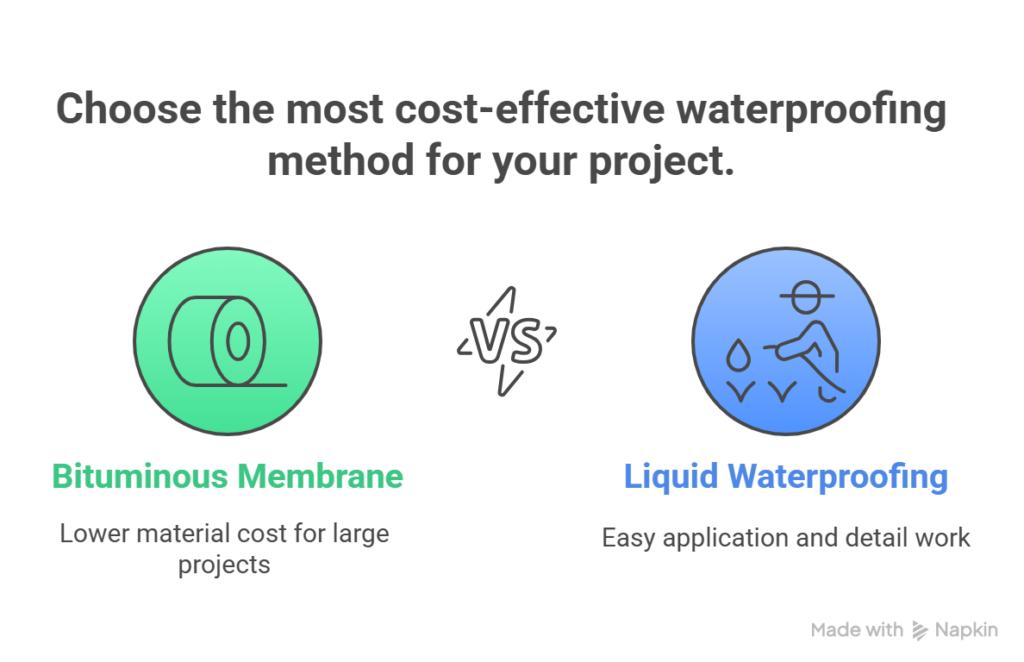
Cost is an important factor in choosing a waterproofing method. Bituminous membrane often costs less for large roofs. It comes in rolls and covers wide areas quickly.
Liquid waterproofing usually costs more per square meter. The price reflects easy application and detail work. It needs more labour for good coverage.
- Bituminous membrane: Lower material cost for big projects.
- Liquid waterproofing: May require more skilled labour.
- Long-term savings: Both can save money if installed well and maintained.
Budget also depends on roof access and prep work needed. Complicated roofs might increase costs for either method.
Long-term Roofing Goals
Think about how long the roof must last and how much care it needs. Bituminous membrane can last 15 to 20 years. It is tough and resists wear well.
Liquid waterproofing usually lasts 10 to 15 years. It is easier to repair and reapply if needed. This option keeps the roof flexible and less prone to cracks.
- Durability: Bituminous offers strong, long-lasting protection.
- Maintenance: Liquid is easier to maintain and fix.
- Weather resistance: Both protect well from rain and cold.
Choosing depends on how often you want to do repairs and how long you expect the roof to last. Both have benefits for different needs.
Reach out to our team for support or inquiries about Bituminous Membrane Vs Liquid Waterproofing
Choosing between bituminous membrane and liquid waterproofing depends on your roof. Bituminous membranes are strong and long-lasting, while liquid waterproofing is flexible and great for tricky areas. Both work well in the UK.
If you’re not sure which one is right, Denco Liquid Waterproofing can help you choose the best option.
Contact us anytime for quick, friendly support.
All You Need to Know
What Is The Main Difference Between Bituminous Membrane And Liquid Waterproofing?
Bituminous membrane is a sheet-based material, while liquid waterproofing is a coating applied as a liquid. Membranes offer strong, durable protection. Liquid waterproofing provides seamless coverage and flexibility. Choice depends on roof type, budget, and weather conditions in the UK.
Which Waterproofing Is Best For Flat Roofs In The Uk?
Bituminous membranes are highly durable and weather-resistant, ideal for UK flat roofs. Liquid waterproofing offers easier application and better crack bridging. For long-term protection, bituminous membranes are preferred, but liquid coatings suit complex surfaces and quick repairs.
How Long Does Bituminous Membrane Waterproofing Last?
Bituminous membranes typically last 15 to 25 years with proper maintenance. Their thick, layered construction resists harsh weather and UV rays. Regular inspections can extend lifespan and prevent leaks on flat roofs in the UK.
Is Liquid Waterproofing Cost-effective For Flat Roofs?
Yes, liquid waterproofing is generally more cost-effective upfront. It requires less labor and can be applied quickly. However, it may need reapplication every 7 to 10 years, affecting long-term costs compared to bituminous membranes.